

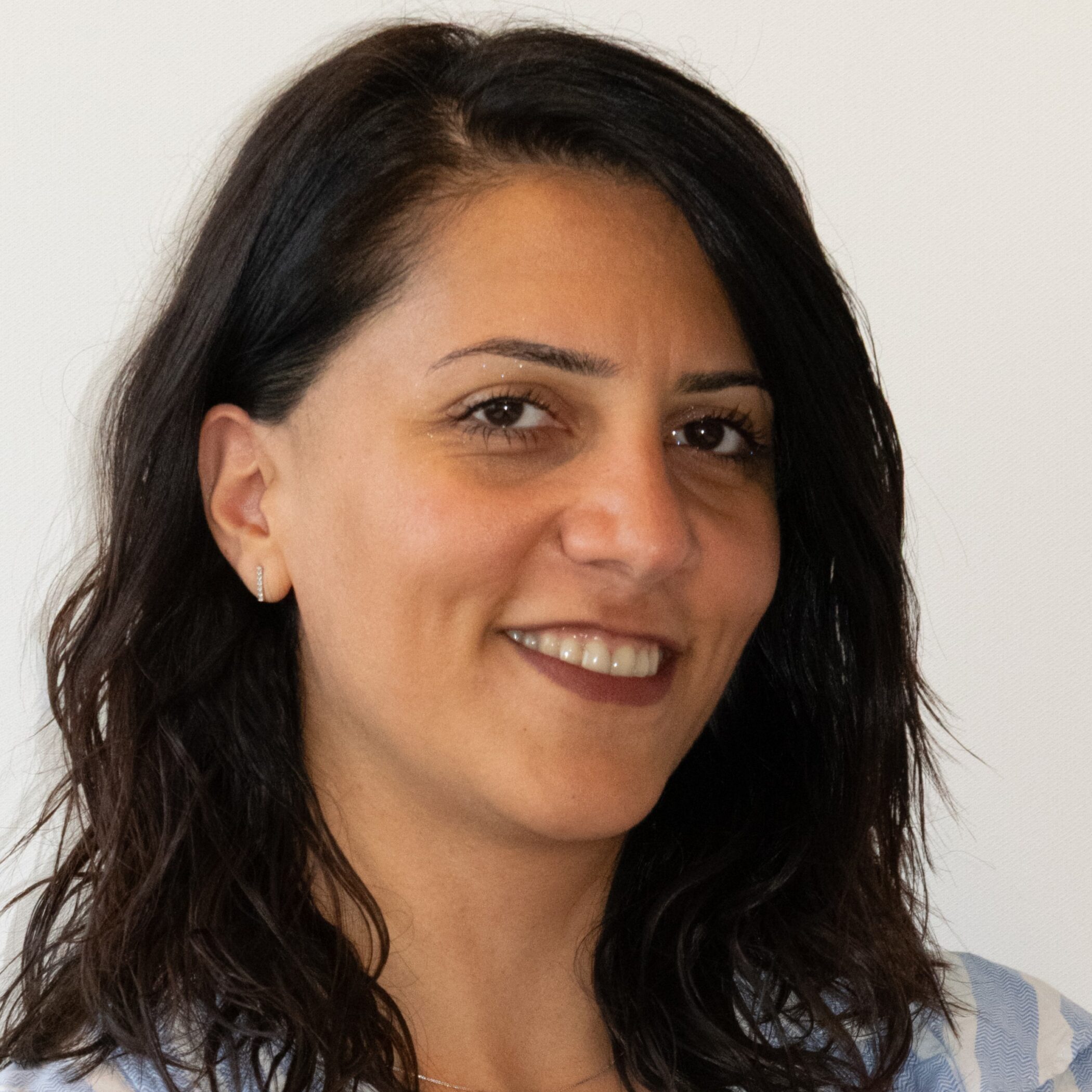
Tatevik Chalyan
Brussels Photonic Team (B-PHOT)
Vrije Universiteit Brussel
Sensing and microscopy: from bio to quantum
Abstract
Exploring the world around us and understanding how nature works since forever, we have used different sensors, first only the natural ones, such as eyes, ears, tongue, or hands. With the advancement of science and technology, nowadays a wide variety of hand-held sensors are commonly used in our daily lives. Benefiting from the fastest available tool – light, there is a continuous development of new instruments to implement optical sensing in medicine and drug delivery, field monitoring and environmental sensing, defence, and space exploration. Biosensing approaches such as refractometric sensing, fluorescence emission, or Raman scattering enable fast, precise, and targeted study of the sample of interest. Enhancing these techniques with the nonlinear and quantum nature of light allows us to study even smaller analytes or even farther events in the universe.
About the speaker
Dr. Tatevik Chalyan is a postdoctoral researcher at the Brussels Photonics Team (B-PHOT), Faculty of Engineering, Vrije Universiteit Brussel, Belgium. Originally from Armenia, she obtained her Master’s degree in Physics from Yerevan State University in 2012 and her degree of European Doctorate in Physics from the University of Trento, Italy, in 2018. Her multidisciplinary research covers a wide range of sensing applications — from bio to quantum — towards gravitational wave detection. She is experienced in integrated photonics-based biosensors, fluorescence microscopy, Raman spectroscopy, laser engineering, optofluidics design and validation, and direct laser writing in polymer. Recently, she has focused on non-classical light, working on quantum squeezing applications, and has joined the Einstein Telescope team to develop a quantum squeezer at 2090 nm wavelength. Her work aims to utilize optics and photonics for a better life.
Beyond academia, Dr. Chalyan brings valuable industry experience, having worked as a laser engineer at LT-PYRKAL in Yerevan, Armenia (2011–2014), and at LioniX International BV in the Netherlands. She is also deeply committed to the photonics community — actively organizing local and international conferences, workshops, and online photonics meetups, while mentoring student chapters and individuals from different countries. A dedicated advocate for students and student chapter rights.
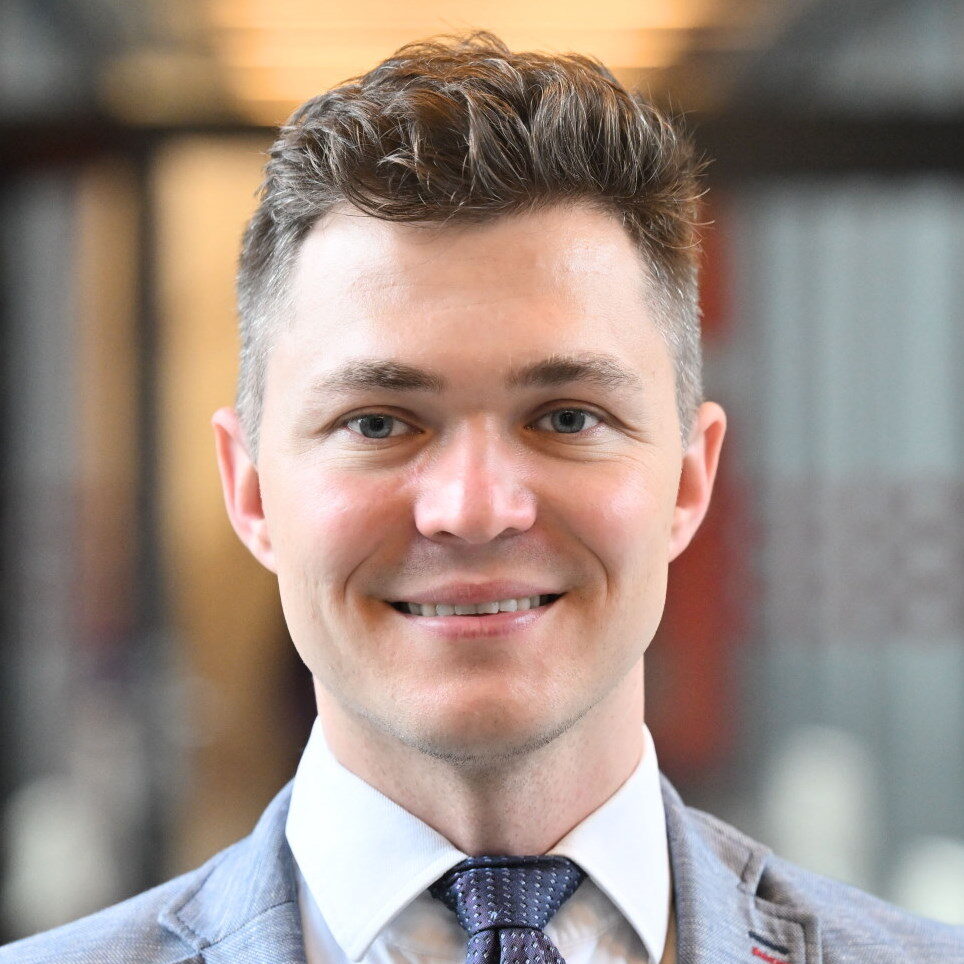
Łukasz Sterczewski
Wrocław University of Science and Technology, Poland
Dual-comb spectroscopy: good, fast, but not cheap?
Abstract
Dual-comb spectroscopy (DCS) is an emerging technique for probing the complex optical properties of a sample in all states of matter. Compared to typical mechanically-scanned Fourier or grating spectrometers, it can provide broadband measurements in micro-to nanoseconds with high resolution. It plays an important role in optical metrology because all measured frequencies can be referenced to primary standards. However, one can ask whether it is possible to use this technique outside laboratories with portable light sources. The talk will discuss the principles and tricks to adapt DCS for portable, battery-operated instruments.
About the speaker
Dr. Łukasz Sterczewski is an Associate Professor at the Wrocław University of Science and Technology (Wroclaw Tech), Poland. His pioneering research focuses on the development of lasers and spectroscopic techniques within the mid-infrared and terahertz (THz) ranges, exploring their transformative applications in science and industry.
Dr. Sterczewski’s academic journey began at Wroclaw Tech, where he completed his Master’s in Electronics. He later specialized in THz frequency combs as a visiting doctoral student at Princeton University, successfully defending his Ph.D. at Wroclaw Tech in 2018. His career is distinguished by tenures at world-renowned institutions, including Caltech and NASA’s Jet Propulsion Laboratory (JPL). These international collaborations provided the foundation for him to return to Poland and establish his own state-of-the-art research group.
Currently, Dr. Sterczewski is the Principal Investigator of a high-impact project on broadband, chip-based terahertz spectroscopy, funded by a prestigious ERC Starting Grant. His work represents a unique synthesis of electronics and optics, pushing the boundaries of what is possible in pharmaceutical diagnostics, medical imaging, and search for organic molecules in space.
Beyond the laboratory, Dr. Sterczewski is a dedicated advocate for the advancement of Polish science. He is a frequent invited speaker at international fora and contributes his expertise to several scientific committees, including Optica Sensing.
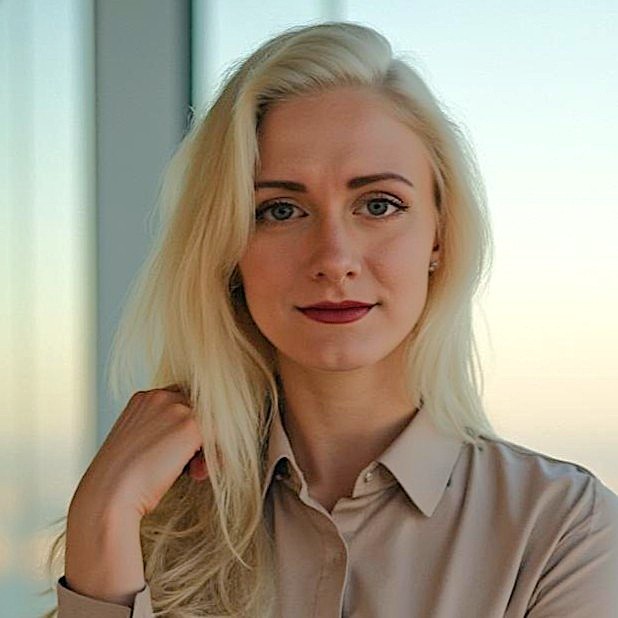
Monika Wolff
Founder, Flow by Wolff
Different Minds, Better Teams. How Neurodiversity Becomes a Strength in Science and Corporate Work
Abstract
Neurodivergent people often bring exceptional strengths to scientific, creative, and technical environments. Yet these strengths do not automatically translate into team performance. They can be lost through unclear expectations, sensory overload, implicit communication, inefficient meetings, hidden knowledge gaps and decision processes that favour speed over shared understanding.
In this session, Monika Wolff shares her experience from science, consulting and neurodiversity-informed team development. The talk introduces neurodiversity through the lens of nervous system regulation and explores what changes when scientists move into corporate or interdisciplinary environments. Participants will learn how neurodiverse teams can work more successfully by making thinking visible, separating idea generation from evaluation and decision-making, and designing collaboration around different cognitive and regulatory needs.
The session includes a short interactive exercise that helps participants reflect on their own thinking patterns, strengths and collaboration needs without requiring personal disclosure or diagnosis. Participants will leave with a practical understanding of how different minds can become a source of better science, stronger teams and more sustainable innovation.
About the speaker
Monika Wolff specializes in improving team performance by integrating diverse working and communication styles, with a dedicated focus on neuroinclusivity. By combining her academic training as a physicist and extensive organizational development experience she developed her unique, system-based approach, enabling solving complex interpersonal problems to find the most optimized solutions in the working environment.
Monika earned her B.Sc. and M.Sc. in Physics from Leibniz University of Hannover, specializing in optics. After graduating, she transitioned into the business sector, where she held such roles as a project manager, business analyst and change coach. Currently, she integrates her interpersonal skills and analytical background by leading her company, Flow by Wolff, which helps organizations build high-performing and well-balanced teams driven by neuroinclusivity.
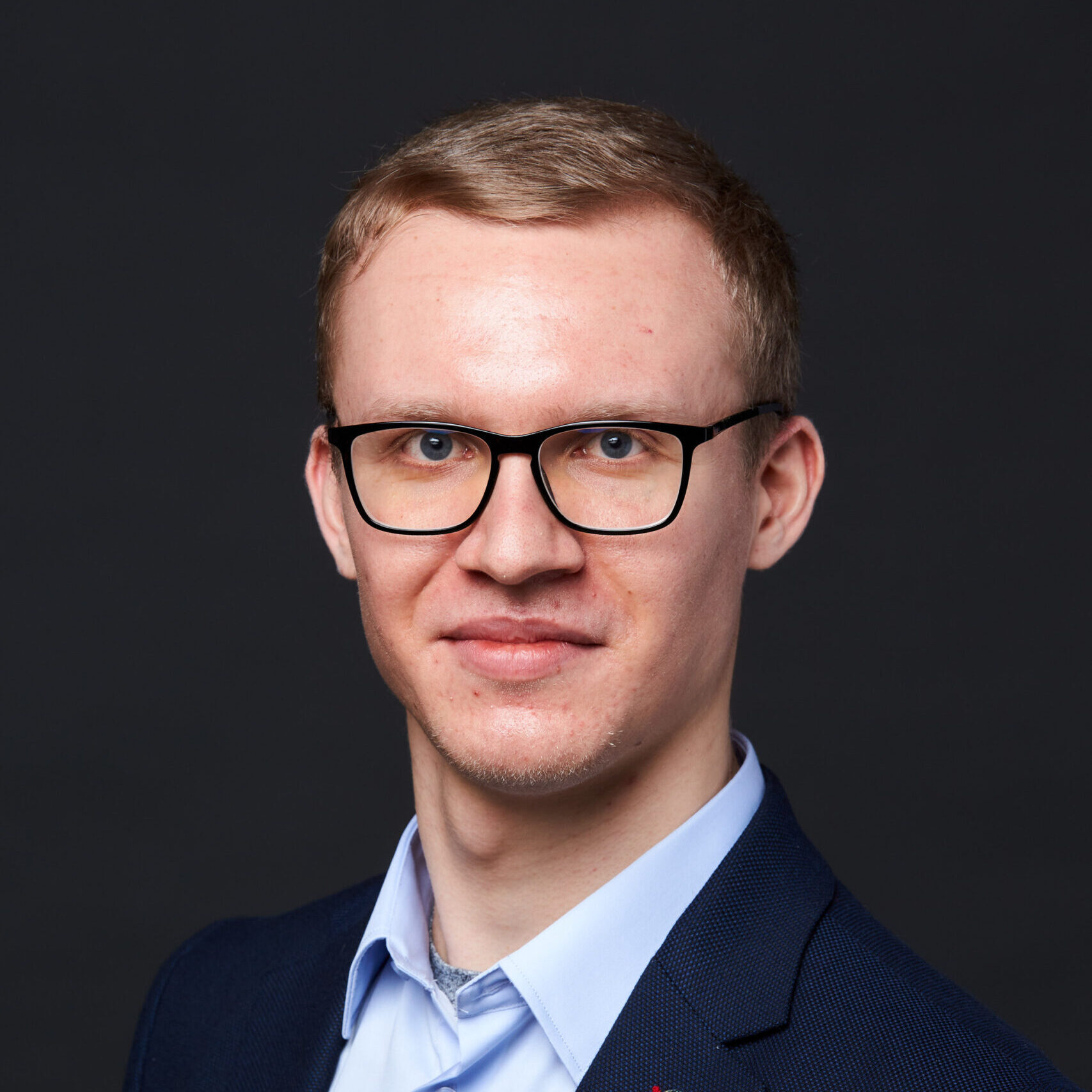
Mateusz Pielach
Institute of Physical Chemistry of the Polish Academy of Sciences / Fluence Technology
Ultrafast fiber lasers – a dual perspective from academia and industry
Abstract
The most traditional career goal for people starting PhD studies is to become an academic researcher. What are the alternatives? How can a PhD degree be useful in industry, and how can you connect both worlds? This talk compares realities of research work from two different perspectives, academia and industry, using the development of all-fiber ultrafast laser systems as our roadmap. Apart from diving into the technicalities of building a femtosecond laser and using it for real-life applications such as high-precision micromachining, we will contrast the daily realities, timelines, and shifting goals of these two worlds. Finally, I will share practical survival tips to help you navigate your research successfully.
About the speaker
Mateusz Pielach is a photonics specialist and R&D Laser Engineer with a robust background bridging academic research and industrial innovation. Right from the beginning of his academic career, he focused on optical fiber laser systems. He obtained his Master’s degree in Mechatronics from the Warsaw University of Technology in 2020. Later, he earned his Ph.D. at the Laser Centre at the Institute of Physical Chemistry of the Polish Academy of Sciences. His research focused on designing and building ultrafast fiber laser systems, with particular emphasis on oscillators utilizing an innovative mode-locking method based on nonlinear loop mirrors. He also contributed to significant interdisciplinary research, including the design of an ultrafast laser system for non-invasive imaging of leukemic cells. He is a START scholarship recipient from the Foundation for Polish Science (2026).
Currently, Dr. Mateusz Pielach works as a Fiber Laser Specialist at the Institute of Physical Chemistry and as an R&D Laser Engineer at Fluence Technology sp. z o.o.. In his commercial work, he focuses on developing ultrafast laser systems tailored for practical applications.